
Become a Fellow___________________

Fellows


Acquiring the status of Fellow or Life Fellow means that the New Zealand Geographical Society (NZGS) recognises and acknowledges individuals who have made a significant contribution to geographic education, practice or research in NZ. While joining the NZGS provides members with collegial and vibrant networking opportunities, access to the latest research (including the New Zealand Geographer), webinars and discussion groups, sounding boards for new ideas, and opportunities to share understanding of ‘our place’, it’s the Fellows who have led these activities. Having the status of a Fellow recognises this and proves that your record of achievement in the discipline has been scrutinised and endorsed by your peers.
Fellows may use the acronym FNZGS on business cards, labels etc. They are eligible to attend NZGS Fellows’ dinners and other prestigious occasions, are involved in nominating other members as Fellows and identifying potential ‘Life Fellows’.
How to Become a Fellow
To be appointed as a Fellow, a geographer must be a member of the NZGS, and:
Either a leader in teaching, practicing or researching geography in NZ, or
Have made a significant contribution to the field of geography (that is, have a sufficient and demonstrated involvement in geography or allied subject through training, professional work, research, publications or other work of a similar nature), and/or
Had not less than five years continuous commitment and service to the NZGS or the New Zealand Board of Geography Teachers (NZBoGT), or similar international organisation.
Retired geographers are also encouraged to apply. Applications should be sent to admin@nzgs.co.nz
Geographer Awards & Awardees
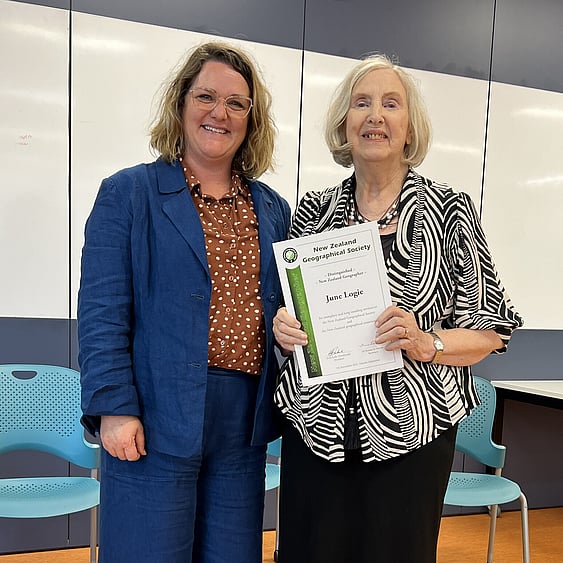
Distinguished New Zealand Geographer Medal
The Society recognises the outstanding and sustained contributions and service the following New Zealand Geographers have made to Geography and society, whether in Aotearoa New Zealand or overseas. The first Distinguished New Zealand Geographer Medals were awarded in 2001. Recipients may use the designation DNZG in recognition of the award.

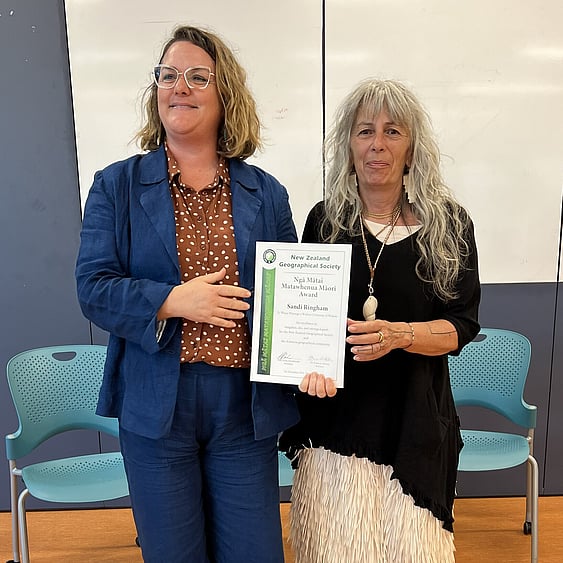
Ngā Mātai Matawhenua Māori Award
This award recognises outstanding rangahau, ako, and ratonga hapori in relation to Ngā Mātai Matawhenua Māori. It celebrates rangahau, ako, and ratonga hapori conducted by, grounded in, or engaged with iwi, hapū, whānau, or other Māori communities and associated places, spaces and environments as experienced through Te Ao Māori and expressed in dynamic forms, past and present. Ngā Mātai Matawhenua Māori embrace the intellectual, physical, social, and emotive dimensions of kaupapa Māori in creative and interconnected relationships between Māori, lands and waters, identity, ancestors, environment, power and self-determination.
The Ngā Mātai Matawhenua Māori Award recognises and promotes excellence in rangahau, ako, and ratonga hapori (including collaborative relationships and partnerships) across and within a variety of spatial scales (iwi, hapū, marae, whānau, kura, wānanga, and other communities).
This award is established to:
Recognise and promote excellence in Ngā Mātai Matawhenua Māori;
Celebrate and promote excellence in rangahau, ako, and ratonga hapori.

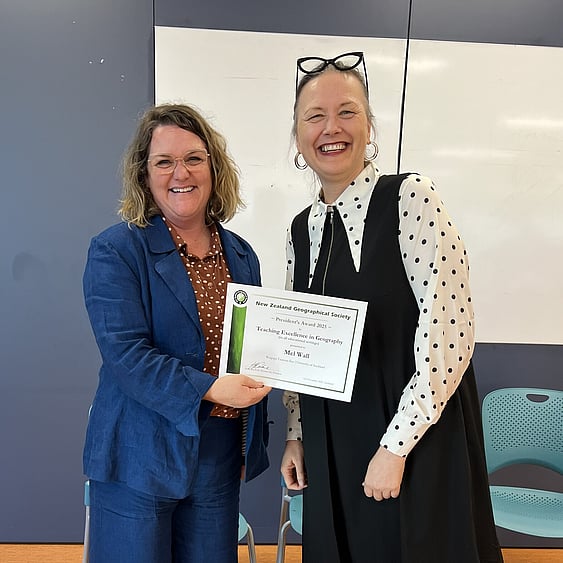
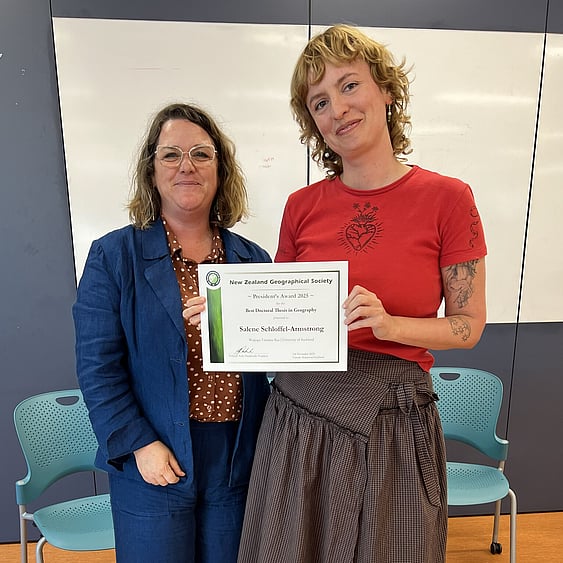
President’s Awards
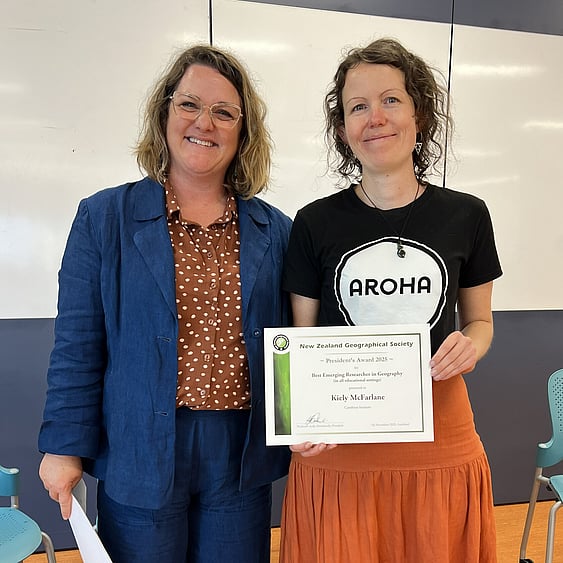
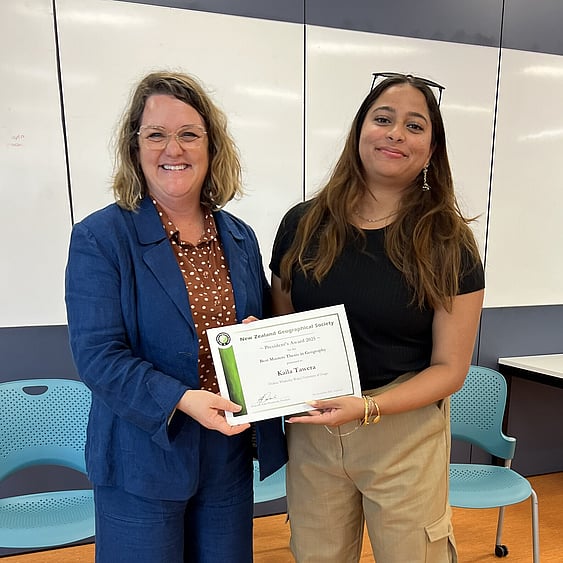
The annual President’s Awards recognise the varied achievements of members, including the:
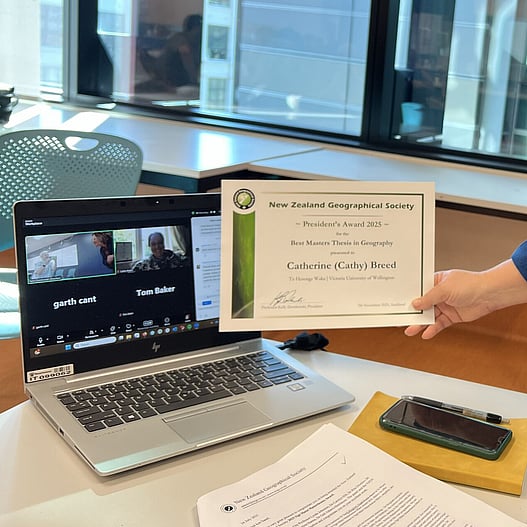
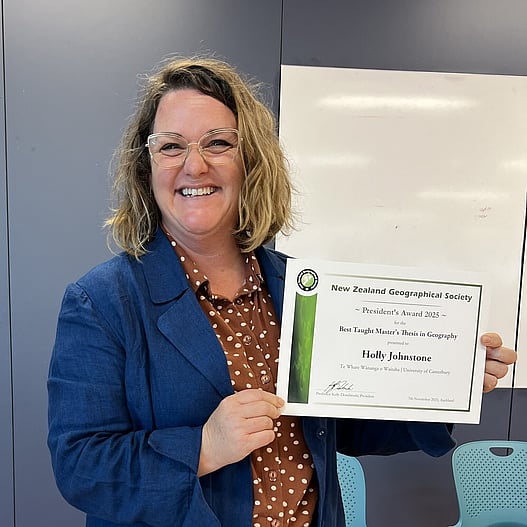
Best Masterate Thesis in Geography
Best Doctoral Thesis in Geography
Emerging Researcher in Geography
Collaborative Research Involving Geographers
Graduate Research Supervision in Geography
Excellence in Teaching in Geography (all settings).
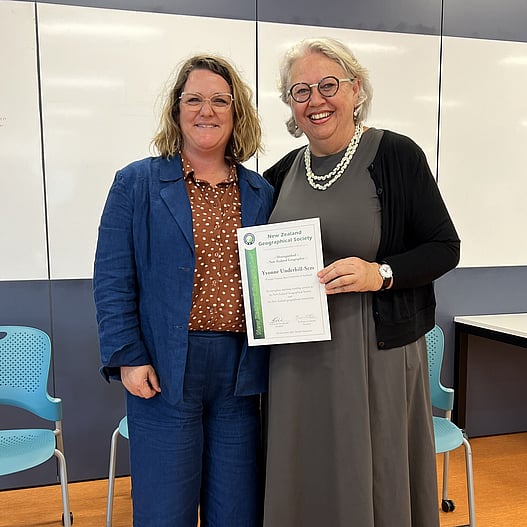
Exceptional Services
Applications should be sent to admin@nzgs.co.nz
2025 President's Award for best Master's Thesis in Geography:






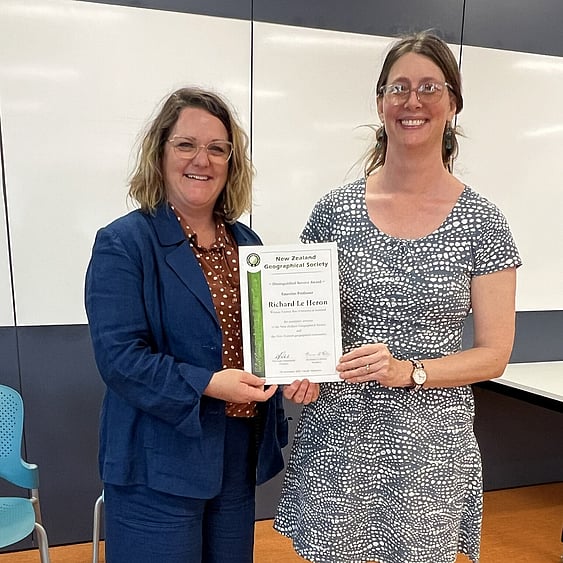
Distinguished Service Awards
In 2009, the additional category of Distinguished Service was added to recognise those members who make an outstanding contribution to the Society, through their branch activities or to the activities of the Society as a whole.The award recognises contributions to service in activities and roles directly or indirectly under the auspices of the New Zealand Geographical Society by a member of the Society. The award specifically cites the nature of the service contribution. Applications should be sent to admin@nzgs.co.nz

Honorary Geographer Awards
The Honorary Geographer award recognises contributions to Geography from those who are not professional geographers. This work may involve raising the profile of the discipline, pursuing social and environmental issues relevant to geography’s core concerns, or otherwise supporting the diffusion of geographical perspectives. These awards are made as and when appropriate.
Nomination inquiries should be made to the NZGS Secretary in the first instance.
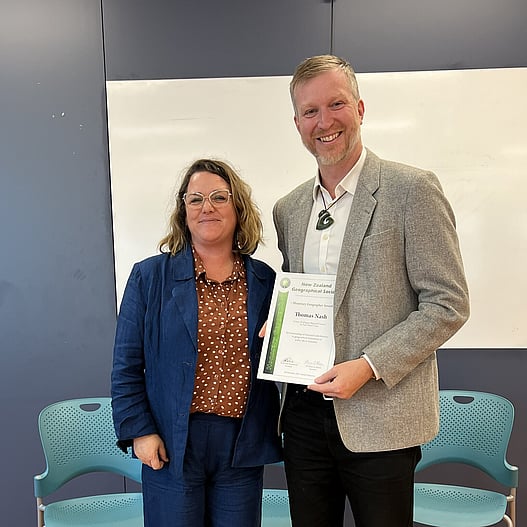
2025 Honorary Geographer Award

Thomas Nash
Social Entrepreneur in Residence at Massey University
Councillor, Greater Wellington Regional Council
The NZGS ECRN Promising Geographer Writing Award
Deadline: June 30th and November 30th, annually
Send to admin@nzgs.co.nz
With the aim of fostering the development of geography in Aotearoa New Zealand and supporting early career researchers beyond a formal programme of study, the NZGS ECRN Promising Geographer Writing Award supports a promising postgraduate student or early career geographer to shape their research into the form of a journal article for submission to the New Zealand Geographer.
The NZGS ECRN Promising Geographer Travel Award
Deadline: June 30th and November 30th, annually
Send to admin@nzgs.co.nz
The NZGS ECRN Promising Geographer Travel Award supports a postgraduate geography student, unwaged or precarious early career geographer to travel for the primary purpose of developing new or incipient collaborative research relationships. The award is intended to support the recipient to develop their research profile, expand their collaborative network, and/or pursue funding opportunities in conversation with new colleagues.


Life Fellowship
Honorary Life Fellowship recognises outstanding and sustained contributions and service in activities and roles directly or indirectly under the auspices of the New Zealand Geographical Society by a member of the Society. The recipient may use the designation LFNZGS in recognition of the award. The first Life Membership (now Life Fellowship) award was made in 1952. Applications should be sent to admin@nzgs.co.nz








Distinguished Service Awards: Past Awardees
In 2009, the additional category of Distinguished Service was added to recognise those members who make an outstanding contribution to the Society, through their branch activities or to the activities of the Society as a whole. The award recognises contributions to service in activities and roles directly or indirectly under the auspices of the New Zealand Geographical Society by a member of the Society. The award specifically cites the nature of the service contribution.
Karen Johnston Awarded 2024
Matthew Henry Awarded 2024
Nick Lewis Awarded 2022
Karen Fisher Awarded 2022
Maria Borovnik Awarded 2020
Louise Richards Awarded 2020
Jane Foster Awarded 2019
Etienne Nel Awarded 2018
Anna Wilson Awarded 2017
Suzanne Baldwin Awarded 2016
Michael Hilton Awarded 2016
Margaret Leamy Awarded 2016
Nicholas Page Awarded 2016
Claire Gibson Awarded 2015
Brian Kendrick Awarded 2015
Anne Olsen Awarded 2015
David Hayward Awarded 2014
Sue Lynch Awarded 2014
Lennox Sharp Awarded 2014
Dr Juliana Mansvelt Awarded 2013
Norman Austin Awarded 2013
Paul Keown Awarded 2012
Jane Evans Awarded 2012
Dr Garth Cant Awarded 2011
Roger Baldwin Awarded 2011
Murray Fastier Awarded 2011
Lynda Johnston Awarded 2010
Annette Lanigan Awarded 2010
Eric Pawson Awarded 2010
Margaret Williams Awarded 2010
Distinguished New Zealand Geographer Medal Past Awardees
The Society recognises the outstanding and sustained contributions and service the following New Zealand Geographers have made to Geography and society, whether in Aotearoa New Zealand or overseas.
Professor Rewi Newnham Awarded 2023
Emeritus Professor Harvey Perkins Awarded 2023
Professor Regina Scheyvens Awarded 2022 Professor Wendy Larner Awarded 2021
Professor Juliana Mansvelt Awarded 2021
Professor Etienne Nel Awarded 2020
Professor Glenn Banks Awarded 2020
Professor Warwick Murray Awarded 2019
Professor Paul. W. Williams Awarded 2019
Professor Michelle Thompson-Fawcett Awarded 2018
Dr Ann Pomeroy Awarded 2018
Associate Professor Lex Chalmers Awarded 2017
Professor Patrick A. Hesp Awarded 2017
Professor John Overton Awarded 2016
Professor Andrew Sturman Awarded 2016
Professor William A.V. Clark Awarded 2015
Emeritus Professor John R. Flenley Awarded 2015
Professor Robin A. Kearns Awarded 2014
Emeritus Professor Robert Miller Kirk Awarded 2013
Professor Philip S. Morrison Awarded 2013
Professor James Anthony (Tony) Binns Awarded 2012
Professor Iain Hay Awarded 2011
Professor Robyn Longhurst Awarded 2010
Professor Michael Roche Awarded 2010
Professor Richard Le Heron Awarded 2009
Peter Holland Awarded 2008
Richard Bedford and Eric Pawson Awarded 2007
Chris Davidson Awarded 2006
Brian John Lynch Awarded 2005
Athol Euan McQueen Awarded 2005
Honorary Life Fellowship Past Awardees
Honorary Life Fellowship recognises outstanding and sustained contributions and service in activities and roles directly or indirectly under the auspices of the New Zealand Geographical Society by a member of the Society. The recipient may use the designation LFNZGS in recognition of the award. The first Life Membership (now Life Fellowship) award was made in 1952.
Richard Heerdegen Awarded September 2014
Emeritus Professor Peter Holland Awarded September 2013
June Logie Awarded December 2012
Michael Shepherd Awarded 2007
Jeff Pepper Awarded 2005
Linda Singh Awarded 2004
Richard Bedford Awarded 2003
Richard Le Heron Awarded 2003
Suzanne Smith Awarded 2002
Michael Roche Awarded 2002
Evelyn Stokes Awarded 2001
Hugh Kidd Awarded 1996
Bruce MacLachlan Awarded 1996
Ian Owens Awarded 1994
Terry Hearn Awarded 1993
Garth Cant Awarded 1993
Grant Anderson Awarded 1989
John Macaulay Awarded 1984
Ronald Lister Awarded 1979
D I MacDonald Awarded 1976
Eileen Banks Awarded 1969
James Fox Awarded 1963
Leigh Pownall Awarded 1961
George Jobberns Awarded 1958
Kenneth B Cumberland Awarded 1955
Benjamin Garnier Awarded 1952
New Zealand Geographical Society
General: admin@nzgs.co.nz
Membership: membership@nzgs.co.nz